CONCEPT

ARCHITECTS

JOURNEY

INVESTMENT

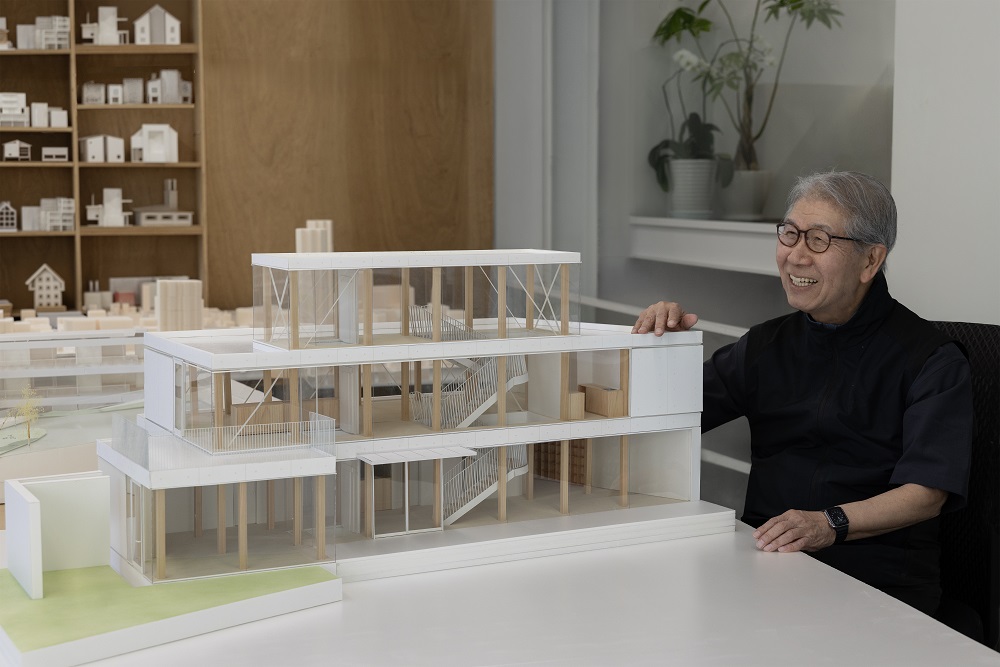
Riken Yamamoto

b. 1945, Beijing · based in Yokohama

The 2024 Pritzker Architecture Prize laureate, honored for a five-decade body of work that treats every threshold as a doorway, a terrace, a glass wall — as an invitation to community rather than a boundary against it.

Practice

Riken Yamamoto & Field Shop, est. 1973

Highest Honor

2024 Pritzker Architecture Prize

Built Work In

Japan, China, South Korea, Switzerland

The Approach

01 / Recurring ideas in the work

Three ideas behind every building

I.

Community as form

Yamamoto defines community simply, as a sense of sharing one space. He has argued that a community is only real if its members support one another, and so his buildings are designed to manufacture chance encounters rather than merely house their programs.

II.

Transparency as trust

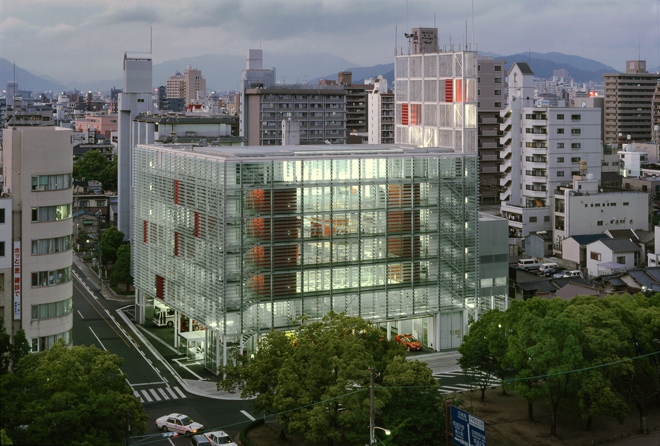
At Hiroshima Nishi Fire Station, a glass-louvred facade lets the public watch firefighters train inside. That transparency is used not for spectacle but to make a civic institution legible and familiar to the people it serves.

III.

Background, then foreground

The Pritzker jury praised his ability to make architecture function as both background and foreground to everyday life, blurring the line between its public and private dimensions. The work is quiet enough to live in, generous enough to gather in.

Selected works

02 / Seven key projects

2006

Kanagawa, Japan

Yokosuka Museum of Art

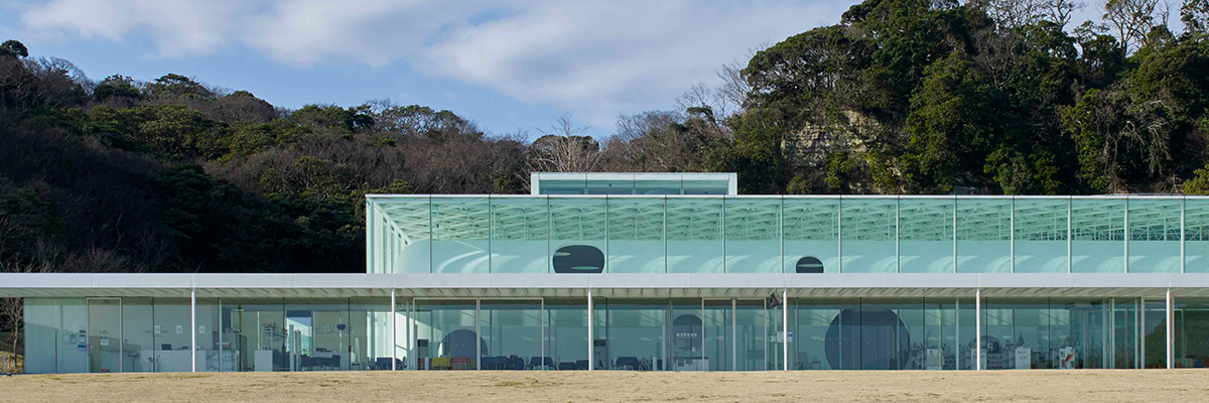
Won through Yokosuka's first quality-based design selection and developed over two years with curators and others. Most of the volume is buried into the seaside valley site so the museum stays in communication with the landscape. Inside, it works as nested boxes: open public facilities at the edge, sensitive exhibition spaces at the core. A double skin of glass and iron board controls the coastal sunlight.

Function
Museum
Floor area
12,095 m²
Completed
2006

2000

Hiroshima, Japan

Hiroshima Nishi Fire Station

A transparent volume wrapped in glass louvres so the public can watch the activity inside. Facilities ring an atrium where firefighters train, and almost the whole building is made of glass-separated spaces. A 4th-floor lobby and visitor terrace are free public space overlooking training and lectures — built on the conviction that a fire station should help shape its local community.

Function
Fire Station & Education Center
Floor area
6,245 m²
Completed
2000

1999

Saitama, Japan

Saitama Prefectural University

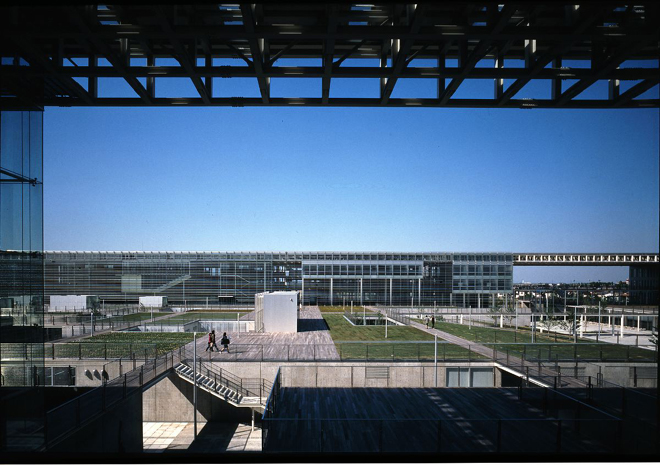
A university for nursing and welfare, where education depends on close mutual cooperation. Rejecting the model of closed, separate faculties, the studio proposed a single connected volume — keeping the relationship between every part of the building as clear and systematic as possible, so the architecture reads almost like the foundation of a city.

Function
University
Floor area
54,080 m²
Completed
1999

2000

Hokkaido, Japan

Future University Hakodate

A university of information science built around a single open "studio," after the studio observed that researchers work much as architects do. Solitary thinking and teamwork share one space; teachers' laboratories sit alongside it behind glass partitions so each side can see the other. The university's own catchphrase: "Open space = Open mind."

Function
University
Floor area
26,839 m²
Completed
2000

2008

Tokyo, Japan

Fussa City Hall

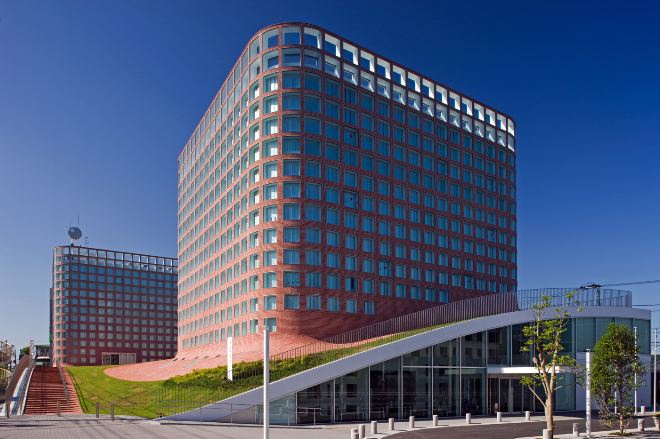
Set in a dense residential area following the local hills above the Tama River. The public lower levels — the "Forum" — sit under an undulating green roof that doubles as public space, with two twin towers rising above. Structure is moved to the outer façade to free the interior; the columns thin toward the top to keep the towers light, built largely from earthquake-resistant pre-cast concrete.

Function
City Hall
Floor area
10,228 m²
Completed
2008

2010

Seongnam, Korea

Pangyo Housing

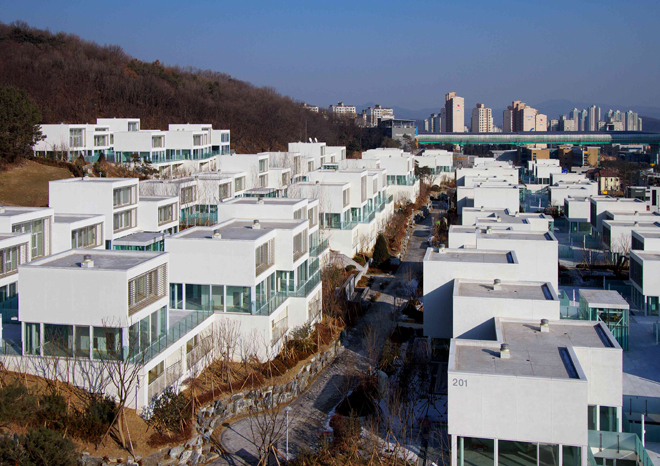
Won in an invited international competition. Nine clusters, each of roughly 9–13 units over three to four storeys, linked by a communal second-level deck. The deck connects a transparent space in each home called "Shiki" — a large porch usable as a drawing room, home office or atelier — letting each cluster adapt to its surroundings.

Function
University
Floor area
26,839 m²
Completed
2000

2012

Tianjin, China

Tianjin Library

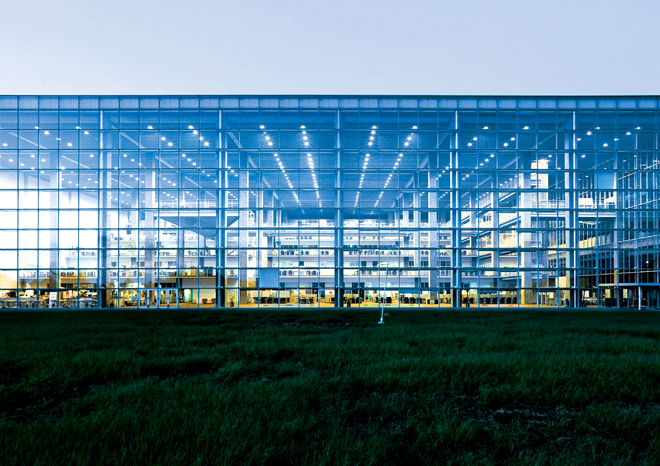
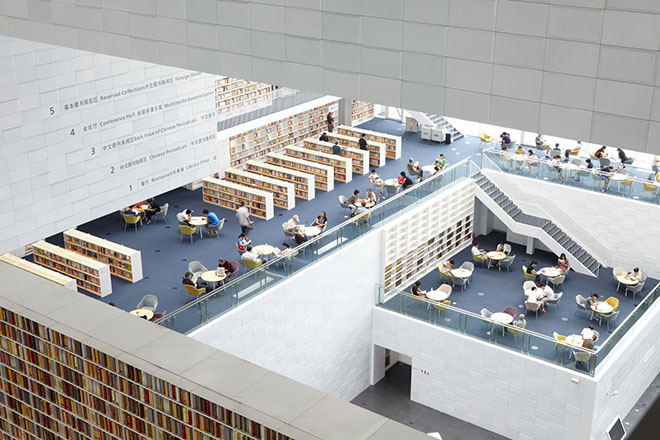
A library at a scale Yamamoto calls "inconceivable in Japan," holding 5 million books across 55,000 m². Wall-beams on a 20.4 m grid are offset layer by layer with mezzanines between, so a five-layer building reads as ten crisscrossing ones. A through-running entrance hall opens it to everyone, with bookshelves built into the structure and reading spaces made as varied as possible.

Function
Library
Floor area
58,154 m²
Completed
2012

Project index

03 / Completed works

The full record of completed projects by Riken Yamamoto & Field Shop, from the firm's first house in 1976 to its most recent work.

2022Nagoya Zokei University, Nagoya
2020THE CIRCLE at Zürich Airport, Switzerland
2019Tokyo Weld Technical Center
2018Koyasu Elementary School, Yokohama
2016Yokohama City University, Yokohama
2014Seoul Gangnam Housing, Korea
2013How to Make a City, Luzern
2013House Vision, Tokyo
2013Yokohama Zoo Restaurant, Kanagawa
2012Tianjin Library, China
2012Home-For-All in Heita, Iwate
2010Pangyo Housing, Seongnam, Korea
2009Utsunomiya Univ. Optical Research Center, Tochigi
2009Namics Techno Core, Niigata
2008Fussa City Hall, Tokyo
2008Dragon Lily House, Gunma
2006Yokosuka Museum of Art, Kanagawa
2005Future Univ. Hakodate Research Building, Hokkaido
2005SUSTRG Office Project, Fukushima
2004Jian Wai SOHO, Beijing
2004Ecoms House, Saga
2003Shinonome Canal Court CODAN, Tokyo
2002Dantsuka Clinic, Saitama
2001Tokyo Weld Technical Center, Shizuoka
2001Ban Building
2000Hiroshima Nishi Fire Station, Hiroshima
2000Future University Hakodate, Hokkaido
2000Yokohama Public Housing, Kanagawa
1999Saitama Prefectural University, Saitama
1996Iwadeyama Junior High School, Miyagi
1996Yamamoto Mental Clinic, Okayama
1996Shimoizumi Community / Care Center, Kanagawa
1995House in Kamakura, Kamakura
1992 to 1994Inter-Junction City series, Kanagawa
1991Hotakubo Housing, Kumamoto
1988HAMLET, Tokyo
1987ROTONDA, Kanagawa
1986GAZEBO, Kanagawa
1978STUDIO STEPS, Kanagawa
1977Yamakawa Villa, Nagano
1976Mihira House, Kanagawa
Recognition

04 / Honors

Pritzker Architecture Prize, 9th Japanese laureate

2024

31st Crystal Award

2025

Japan Institute of Architects Award, Yokosuka Museum of Art

2010

Building Contractors Society Prize, Namics Techno Core

2010

Building Contractors Society Prize, Yokosuka Museum of Art

2008

Fukushima Architecture Culture Award (25th), Fukushima ecoms Pavilion

2007

Architectural Institute of Japan Award

Two-time recipient

"He is a reassuring architect who brings dignity to everyday life. Normality becomes extraordinary."

Alejandro Aravena, Pritzker Jury Chair, 2024

Profile 01 / 04 · Riken Yamamoto

Project descriptions and specifications are drawn from Riken Yamamoto & Field Shop official site (riken-yamamoto.co.jp)

Riken Yamamoto

b. 1945, Beijing · based in Yokohama

The 2024 Pritzker Architecture Prize laureate, honored for a five-decade body of work that treats every threshold as a doorway, a terrace, a glass wall — as an invitation to community rather than a boundary against it.

Practice

Riken Yamamoto & Field Shop, est. 1973

Highest Honor

2024 Pritzker Architecture Prize

Built Work In

Japan, China, South Korea, Switzerland

01 / Recurring ideas in the work

The Approach

Three ideas behind every building

I.

Community as form

Yamamoto defines community simply, as a sense of sharing one space. He has argued that a community is only real if its members support one another, and so his buildings are designed to manufacture chance encounters rather than merely house their programs.

II.

Transparency as trust

At Hiroshima Nishi Fire Station, a glass-louvred facade lets the public watch firefighters train inside. That transparency is used not for spectacle but to make a civic institution legible and familiar to the people it serves.

III.

Background, then foreground

The Pritzker jury praised his ability to make architecture function as both background and foreground to everyday life, blurring the line between its public and private dimensions. The work is quiet enough to live in, generous enough to gather in.

02 / Seven key projects

Selected works

2006

Kanagawa, Japan

Yokosuka Museum of Art

Won through Yokosuka's first quality-based design selection and developed over two years with curators and others. Most of the volume is buried into the seaside valley site so the museum stays in communication with the landscape. Inside, it works as nested boxes: open public facilities at the edge, sensitive exhibition spaces at the core. A double skin of glass and iron board controls the coastal sunlight.

Function
Museum
Floor area
12,095 m²
Completed
2006

2000

Hiroshima, Japan

Hiroshima Nishi Fire Station

A transparent volume wrapped in glass louvres so the public can watch the activity inside. Facilities ring an atrium where firefighters train, and almost the whole building is made of glass-separated spaces. A 4th-floor lobby and visitor terrace are free public space overlooking training and lectures — built on the conviction that a fire station should help shape its local community.

Function
Fire Station & Education Center
Floor area
6,245 m²
Completed
2000

1999

Saitama, Japan

Saitama Prefectural University

A university for nursing and welfare, where education depends on close mutual cooperation. Rejecting the model of closed, separate faculties, the studio proposed a single connected volume — keeping the relationship between every part of the building as clear and systematic as possible, so the architecture reads almost like the foundation of a city.

Function
University
Floor area
54,080 m²
Completed
1999

2000

Hokkaido, Japan

Future University Hakodate

A university of information science built around a single open "studio," after the studio observed that researchers work much as architects do. Solitary thinking and teamwork share one space; teachers' laboratories sit alongside it behind glass partitions so each side can see the other. The university's own catchphrase: "Open space = Open mind."

Function
University
Floor area
26,839 m²
Completed
2000

2008

Tokyo, Japan

Fussa City Hall

Set in a dense residential area following the local hills above the Tama River. The public lower levels — the "Forum" — sit under an undulating green roof that doubles as public space, with two twin towers rising above. Structure is moved to the outer façade to free the interior; the columns thin toward the top to keep the towers light, built largely from earthquake-resistant pre-cast concrete.

Function
City Hall
Floor area
10,228 m²
Completed
2008

2010

Seongnam, Korea

Pangyo Housing

Won in an invited international competition. Nine clusters, each of roughly 9–13 units over three to four storeys, linked by a communal second-level deck. The deck connects a transparent space in each home called "Shiki" — a large porch usable as a drawing room, home office or atelier — letting each cluster adapt to its surroundings.

Function
University
Floor area
26,839 m²
Completed
2000

2012

Tianjin, China

Tianjin Library

A library at a scale Yamamoto calls "inconceivable in Japan," holding 5 million books across 55,000 m². Wall-beams on a 20.4 m grid are offset layer by layer with mezzanines between, so a five-layer building reads as ten crisscrossing ones. A through-running entrance hall opens it to everyone, with bookshelves built into the structure and reading spaces made as varied as possible.

Function
Library
Floor area
58,154 m²
Completed
2012

03 / Completed works

Project index

The full record of completed projects by Riken Yamamoto & Field Shop, from the firm's first house in 1976 to its most recent work.

2022Nagoya Zokei University, Nagoya
2020THE CIRCLE at Zürich Airport, Switzerland
2019Tokyo Weld Technical Center
2018Koyasu Elementary School, Yokohama
2016Yokohama City University, Yokohama
2014Seoul Gangnam Housing, Korea
2013How to Make a City, Luzern
2013House Vision, Tokyo
2013Yokohama Zoo Restaurant, Kanagawa
2012Tianjin Library, China
2012Home-For-All in Heita, Iwate
2010Pangyo Housing, Seongnam, Korea
2009Utsunomiya Univ. Optical Research Center, Tochigi
2009Namics Techno Core, Niigata
2008Fussa City Hall, Tokyo
2008Dragon Lily House, Gunma
2006Yokosuka Museum of Art, Kanagawa
2005Future Univ. Hakodate Research Building, Hokkaido
2005SUSTRG Office Project, Fukushima
2004Jian Wai SOHO, Beijing
2004Ecoms House, Saga
2003Shinonome Canal Court CODAN, Tokyo
2002Dantsuka Clinic, Saitama
2001Tokyo Weld Technical Center, Shizuoka
2001Ban Building
2000Hiroshima Nishi Fire Station, Hiroshima
2000Future University Hakodate, Hokkaido
2000Yokohama Public Housing, Kanagawa
1999Saitama Prefectural University, Saitama
1996Iwadeyama Junior High School, Miyagi
1996Yamamoto Mental Clinic, Okayama
1996Shimoizumi Community / Care Center, Kanagawa
1995House in Kamakura, Kamakura
1992 to 1994Inter-Junction City series, Kanagawa
1991Hotakubo Housing, Kumamoto
1988HAMLET, Tokyo
1987ROTONDA, Kanagawa
1986GAZEBO, Kanagawa
1978STUDIO STEPS, Kanagawa
1977Yamakawa Villa, Nagano
1976Mihira House, Kanagawa
04 / Honors

Recognition

Pritzker Architecture Prize, 9th Japanese laureate

2024

31st Crystal Award

2025

Japan Institute of Architects Award, Yokosuka Museum of Art

2010

Building Contractors Society Prize, Namics Techno Core

2010

Building Contractors Society Prize, Yokosuka Museum of Art

2008

Fukushima Architecture Culture Award (25th), Fukushima ecoms Pavilion

2007

Architectural Institute of Japan Award

Two-time recipient

"He is a reassuring architect who brings dignity to everyday life. Normality becomes extraordinary."

Alejandro Aravena, Pritzker Jury Chair, 2024

Profile 01 / 04 · Riken Yamamoto

Project descriptions and specifications are drawn from Riken Yamamoto & Field Shop official site (riken-yamamoto.co.jp)