Kengo Kuma
Kengo Kuma · Kengo Kuma & Associates, est. 1990
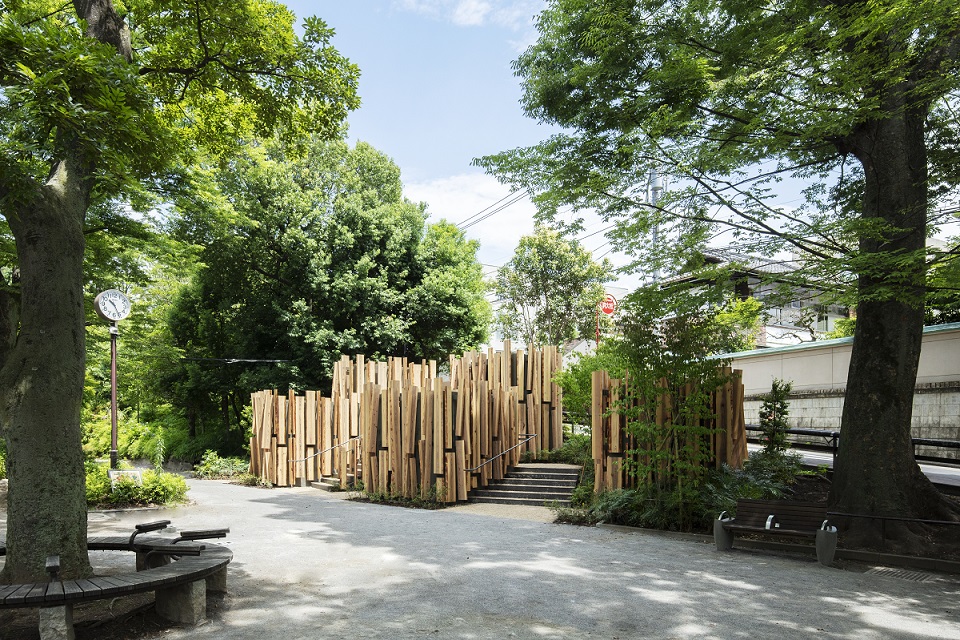
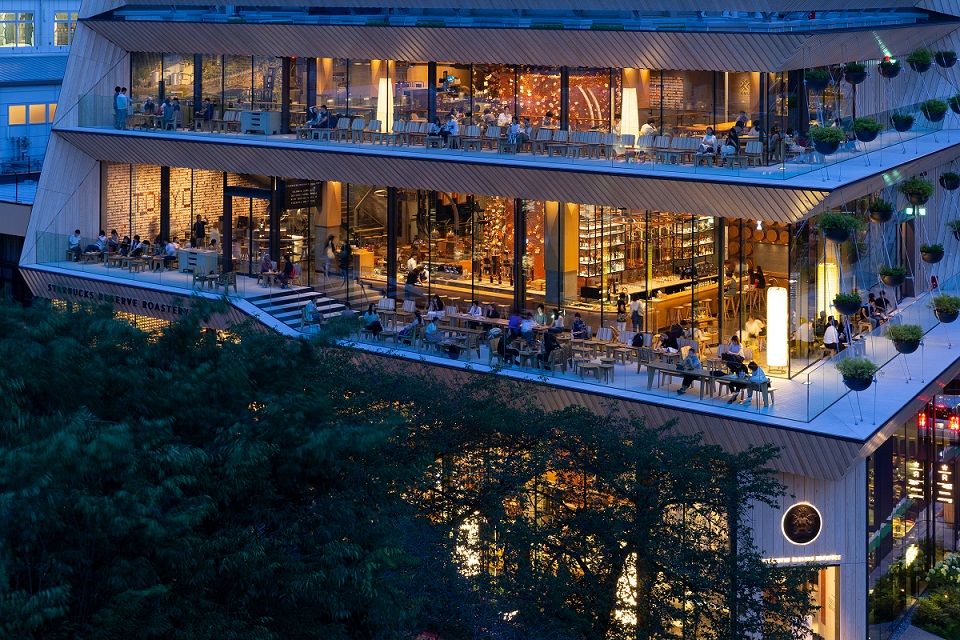
Kuma describes his aim as 'to recover the place' and his architecture as a 'frame of nature,' built from natural materials in place of concrete and steel. Much of his work slices wood and stone thin and layers them, giving even large buildings a sense of lightness.
Practice
Kengo Kuma & Associates
Work Underway In
More than 50 countries
Best Known For
Japan National Stadium, Tokyo
The Approach
01 / Recurring ideas in the work
Working with nature, not against it.
I.
Recovering the place
In Kuma's words, his aim is "to recover the place," which is the result of nature and time. He describes his architecture as "some kind of frame of nature," through which we can experience the surroundings more deeply and intimately.
II.
A new transparency
Transparency, he notes, is a characteristic of Japanese architecture. Rather than glass alone, he uses light and natural materials to reach a new kind of transparency, with his studio constantly searching for materials to replace concrete and steel.
III.
Dissolving the object
His book Anti-Object calls for an architecture of relations that respects its surroundings instead of dominating them. Even heavy stone is sliced thin and layered so a building reads as gentle, light, and human in scale.
Selected works
02 / Seven key projects
2019
Tokyo, Japan
Japan National Stadium
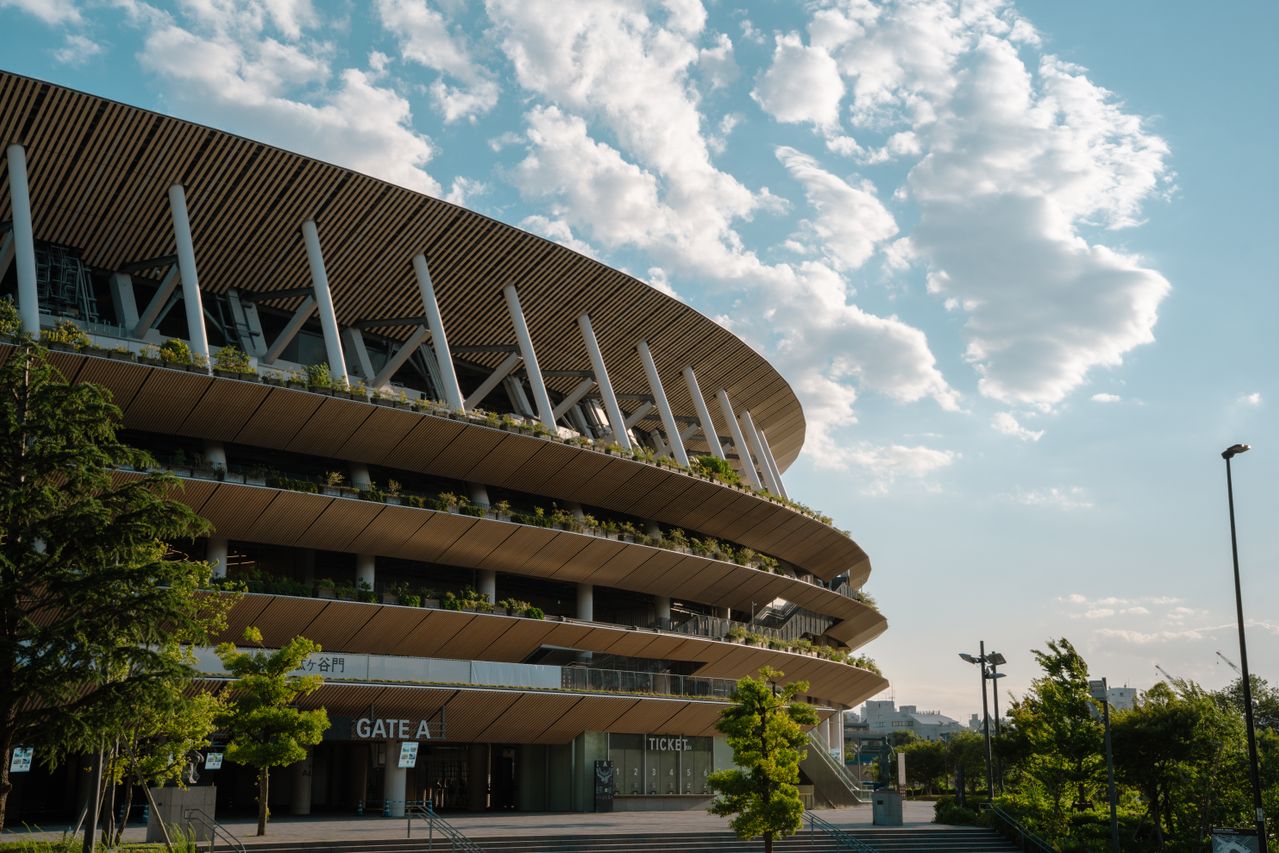
The main stadium for the 2020 Tokyo Olympic and Paralympic Games, and Kuma's most prominent civic commission. It carries his material philosophy onto a vast scale, with timber drawn from across Japan used throughout, so a national monument is built from warm, layered wood rather than bare concrete and steel.
Function
Stadium
Location
Tokyo
Completed
2019
2018
Dundee, Scotland
V&A Dundee
Scotland's first dedicated design museum, set on the River Tay. Its layered exterior of long horizontal panels evokes a Scottish cliff face, bringing Kuma's idea of dissolving a solid wall into stacked, light-catching elements to a major waterfront landmark. The work earned the Japan Art Academy Prize and Imperial Prize in 2024.
Function
Design Museum
Location
Dundee, UK
Completed
2018
2009
Tokyo, Japan
Nezu Museum
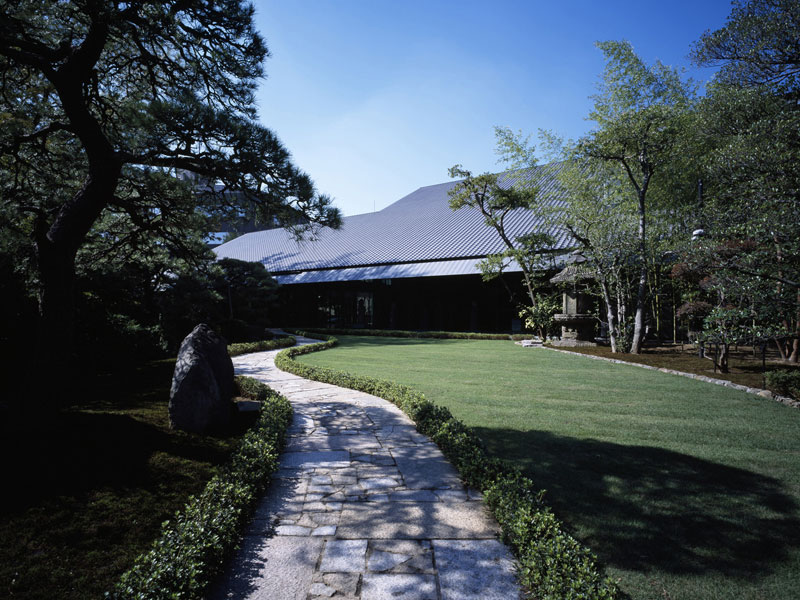
A museum of pre-modern Japanese and East Asian art in Minato, Tokyo. A long, deep eave and a bamboo-lined approach draw visitors from the busy street into a calm threshold, framing a garden and demonstrating Kuma's use of natural materials and shadow to soften the boundary between city and interior. Awarded the Mainichi Art Award in 2010.
Function
Museum
Location
Tokyo
Completed
2009
2011
Yusuhara, Japan
Yusuhara Wooden Bridge Museum
A bridge-like structure that spans between two buildings, supported by a stack of timber that fans outward from a single central pier. It revives a traditional Japanese cantilever technique, building a large public form entirely from small, layered wooden members. Awarded the Minister of Education's Art Encouragement Prize in 2011.
Function
Museum / Bridge
Location
Kochi
Completed
2011
2000
Nasu, Japan
Stone Museum
A museum near Nasu where Kuma takes the heaviest of materials and makes it appear light. Local stone is cut into thin slices and set as louvres, so solid walls seem to dissolve and let light and air pass through. The project won the International Stone Architecture Award in Italy in 2001.
Function
Museum
Location
Tochigi
Completed
2000
2000
Nakagawa, Japan
Nakagawa-machi Bato Hiroshige Museum
A museum dedicated to the ukiyo-e artist Hiroshige, wrapped in fine timber louvres made from local cedar. The screen of thin wooden slats filters daylight and dissolves the building's surface, an early and defining statement of Kuma's layered-material language. It won the Togo Murano Award in 2001.
Function
Museum
Location
Tochigi
Completed
2000
2002
Beijing, China
Great (Bamboo) Wall House
A house built as part of the Commune by the Great Wall, using bamboo as both structure and screen. Walls of spaced bamboo filter light and views, tying the house to its mountainous setting and extending Kuma's search for local, natural materials beyond Japan
Function
House
Location
Beijing
Completed
2002
Project index
03 / Completed works
A selection of completed works as listed by Kengo Kuma & Associates, whose portfolio now spans more than 50 countries.
2024Calouste Gulbenkian Foundation, Southern Apex, Portugal
2024Saint-Denis Pleyel Station, France
2024UCCA Clay Museum, China
2024Audeum Audio Museum, Korea
2024Shibuya SCC Sendagaya Community Center, Japan
2024Alberni, Vancouver, Canada
2023Aoi Aso Shrine / National Treasure Memorial Hall, Japan
2022New Hans Christian Andersen Museum, Denmark
2022Albert Kahn Museum, France
2022Minamisanriku 311 Memorial, Japan
2022Hanling Museum of Art, China
2020Tokorozawa Sakura Town Kadokawa Culture Museum, Japan
2020Science Tokyo Hisao & Hiroko Taki Plaza, Japan
2020Takanawa Gateway Station, Tokyo
2019Japan National Stadium, Tokyo
2019Odunpazarı Modern Museum, Turkey
2019Meiji Jingu Museum, Tokyo
2019The Exchange, Sydney, Australia
2018V&A Dundee, Scotland
2018Misono-za, Nagoya
2016China Academy of Art's Folk Art Museum, Hangzhou
2013Cité des Arts et de la Culture, Besançon, France
2012Asakusa Culture Tourist Information Center, Tokyo
2011Yusuhara Wooden Bridge Museum, Kochi
2010Stone Roof, Nagano
2009Nezu Museum, Tokyo
2008The Opposite House, Beijing
2005Nagasaki Prefectural Art Museum, Nagasaki
2003LVMH Group Japan Headquarters, Osaka
2002Great (Bamboo) Wall House, Beijing
2000Stone Museum, Nasu
2000Nakagawa-machi Bato Hiroshige Museum, Tochigi
1995Water / Glass, Atami
1994Kiro-San Observatory, Ehime
Recognition
04 / Honors
38th Louis I. Kahn Award (US)
2025
Japan Art Academy Prize and Imperial Prize, for V&A Dundee
2024
Named one of Time magazine's 100 most influential people
2021
John D. Rockefeller 3rd Award (US)
2019
Global Award for Sustainable Architecture (France)
2016
Officier de l'Ordre des Arts et des Lettres (France)
2010
Mainichi Art Award, for Nezu Museum
2010
Spirit of Nature Wood Architecture Award (Finland)
2002
International Stone Architecture Award, for Stone Museum (Italy)
2001
Architectural Institute of Japan Award, for Noh Stage in the Forest
1997
My architecture is some kind of frame of nature. With it, we can experience nature more deeply and more intimately.
Kengo Kuma
Profile 02 / 04 · Kengo Kuma
Project descriptions and specifications are drawn from Kengo Kuma & Associates official site (https://kkaa.co.jp/en/)
Kengo Kuma
Kengo Kuma · Kengo Kuma & Associates, est. 1990
Kuma describes his aim as 'to recover the place' and his architecture as a 'frame of nature,' built from natural materials in place of concrete and steel. Much of his work slices wood and stone thin and layers them, giving even large buildings a sense of lightness.
Practice
Kengo Kuma & Associates
Work Underway In
More than 50 countries
Best Known For
Japan National Stadium, Tokyo
01 / Recurring ideas in the work
The Approach
Working with nature, not against it.
I.
Recovering the place
In Kuma's words, his aim is "to recover the place," which is the result of nature and time. He describes his architecture as "some kind of frame of nature," through which we can experience the surroundings more deeply and intimately.
II.
A new transparency
Transparency, he notes, is a characteristic of Japanese architecture. Rather than glass alone, he uses light and natural materials to reach a new kind of transparency, with his studio constantly searching for materials to replace concrete and steel.
III.
Dissolving the object
His book Anti-Object calls for an architecture of relations that respects its surroundings instead of dominating them. Even heavy stone is sliced thin and layered so a building reads as gentle, light, and human in scale.
02 / Seven key projects
Selected works
2019
Tokyo, Japan
Japan National Stadium
The main stadium for the 2020 Tokyo Olympic and Paralympic Games, and Kuma's most prominent civic commission. It carries his material philosophy onto a vast scale, with timber drawn from across Japan used throughout, so a national monument is built from warm, layered wood rather than bare concrete and steel.
Function
Stadium
Location
Tokyo
Completed
2019
2018
Dundee, Scotland
V&A Dundee
Scotland's first dedicated design museum, set on the River Tay. Its layered exterior of long horizontal panels evokes a Scottish cliff face, bringing Kuma's idea of dissolving a solid wall into stacked, light-catching elements to a major waterfront landmark. The work earned the Japan Art Academy Prize and Imperial Prize in 2024.
Function
Design Museum
Location
Dundee, UK
Completed
2018
2009
Tokyo, Japan
Nezu Museum
A museum of pre-modern Japanese and East Asian art in Minato, Tokyo. A long, deep eave and a bamboo-lined approach draw visitors from the busy street into a calm threshold, framing a garden and demonstrating Kuma's use of natural materials and shadow to soften the boundary between city and interior. Awarded the Mainichi Art Award in 2010.
Function
Museum
Location
Tokyo
Completed
2009
2011
Yusuhara, Japan
Yusuhara Wooden Bridge Museum
A bridge-like structure that spans between two buildings, supported by a stack of timber that fans outward from a single central pier. It revives a traditional Japanese cantilever technique, building a large public form entirely from small, layered wooden members. Awarded the Minister of Education's Art Encouragement Prize in 2011.
Function
Museum / Bridge
Location
Kochi
Completed
2011
2000
Nasu, Japan
Stone Museum
A museum near Nasu where Kuma takes the heaviest of materials and makes it appear light. Local stone is cut into thin slices and set as louvres, so solid walls seem to dissolve and let light and air pass through. The project won the International Stone Architecture Award in Italy in 2001.
Function
Museum
Location
Tochigi
Completed
2000
2000
Nakagawa, Japan
Nakagawa-machi Bato Hiroshige Museum
Won in an invited international competition. Nine clusters, each of roughly 9–13 units over three to four storeys, linked by a communal second-level deck. The deck connects a transparent space in each home called "Shiki" — a large porch usable as a drawing room, home office or atelier — letting each cluster adapt to its surroundings.
Function
Museum
Location
Tochigi
Completed
2000
2002
Beijing, China
Great (Bamboo) Wall House
A house built as part of the Commune by the Great Wall, using bamboo as both structure and screen. Walls of spaced bamboo filter light and views, tying the house to its mountainous setting and extending Kuma's search for local, natural materials beyond Japan
Function
House
Location
Beijing
Completed
2002
03 / Completed works
Project index
A selection of completed works as listed by Kengo Kuma & Associates, whose portfolio now spans more than 50 countries.
2024Calouste Gulbenkian Foundation, Southern Apex, Portugal
2024Saint-Denis Pleyel Station, France
2024UCCA Clay Museum, China
2024Audeum Audio Museum, Korea
2024Shibuya SCC Sendagaya Community Center, Japan
2024Alberni, Vancouver, Canada
2023Aoi Aso Shrine / National Treasure Memorial Hall, Japan
2022New Hans Christian Andersen Museum, Denmark
2022Albert Kahn Museum, France
2022Minamisanriku 311 Memorial, Japan
2022Hanling Museum of Art, China
2020Tokorozawa Sakura Town Kadokawa Culture Museum, Japan
2020Science Tokyo Hisao & Hiroko Taki Plaza, Japan
2020Takanawa Gateway Station, Tokyo
2019Japan National Stadium, Tokyo
2019Odunpazarı Modern Museum, Turkey
2019Meiji Jingu Museum, Tokyo
2019The Exchange, Sydney, Australia
2018V&A Dundee, Scotland
2018Misono-za, Nagoya
2016China Academy of Art's Folk Art Museum, Hangzhou
2013Cité des Arts et de la Culture, Besançon, France
2012Asakusa Culture Tourist Information Center, Tokyo
2011Yusuhara Wooden Bridge Museum, Kochi
2010Stone Roof, Nagano
2009Nezu Museum, Tokyo
2008The Opposite House, Beijing
2005Nagasaki Prefectural Art Museum, Nagasaki
2003LVMH Group Japan Headquarters, Osaka
2002Great (Bamboo) Wall House, Beijing
2000Stone Museum, Nasu
2000Nakagawa-machi Bato Hiroshige Museum, Tochigi
1995Water / Glass, Atami
1994Kiro-San Observatory, Ehime